The Indigenous Roots of Harm Reduction
An introductory knowledge share for providers and community members deepening their understanding of Indigenous harm reduction.
Facilitated by Glo V. · @nalgonapride
One Event · Two Dates · One Registration
Your registration covers both May 28 and July 1. Attend one or attend both.
Your registration includes the session recording.
About this knowledge share
While Western public health situates harm reduction within the HIV/AIDS movement of the 1980s, Indigenous peoples across Turtle Island and the world have practiced forms of relational and land-based care since time immemorial.
It is history that got buried under a public health origin story that started the clock in 1980s Amsterdam and pretended nothing came before it — as if communities had not already been moving toward each other across generations, building systems of care out of relationship and responsibility.
This knowledge share is about what came before that story. Glo V. has spent years doing this research outside of institutions, tracing what Indigenous peoples across Turtle Island have always understood about care and survival.
"It was never supposed to be confined to injection drug use or substance use. It's been a way of looking at the world and practicing care where people are experiencing many forms of violence."
Session Dates
Pick your date — or attend both.
Date Option One
May 28, 2026
4:30 PM PST
Online link shared upon registration.
Date Option Two
July 1, 2026
4:30 PM PST
Online link shared upon registration.
Both dates cover the same content with slight adjustments. Registration includes the recording.
What We Will Cover
Four threads woven across one ninety-minute session.
Defining Indigenous Harm Reduction
What it is, where it comes from, and why it is not a culturally adapted version of Western models.
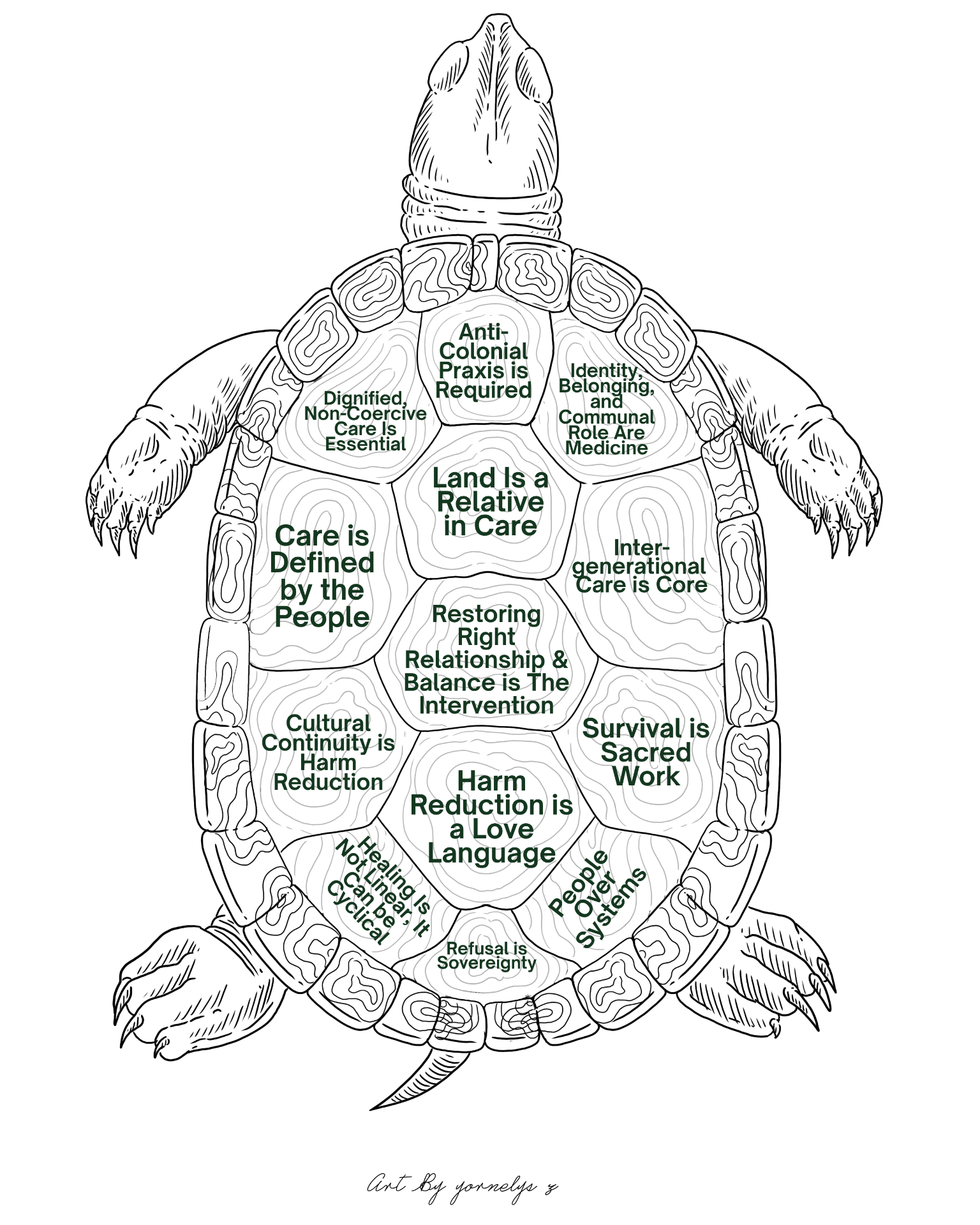
The 13 Tortogita Teachings
A framework grounded in Indigenous lifeways and relational values.
AIM and Harm Reduction
How the American Indian Movement built community-controlled care under state violence and neglect.
Western vs. Indigenous
A direct comparison across worldview, purpose, healing process, and ethic of care.
The Framework
The 13 Tortogita Teachings
A living map carried on the turtle's back — thirteen teachings that ground Indigenous harm reduction in relationship, land, and care.
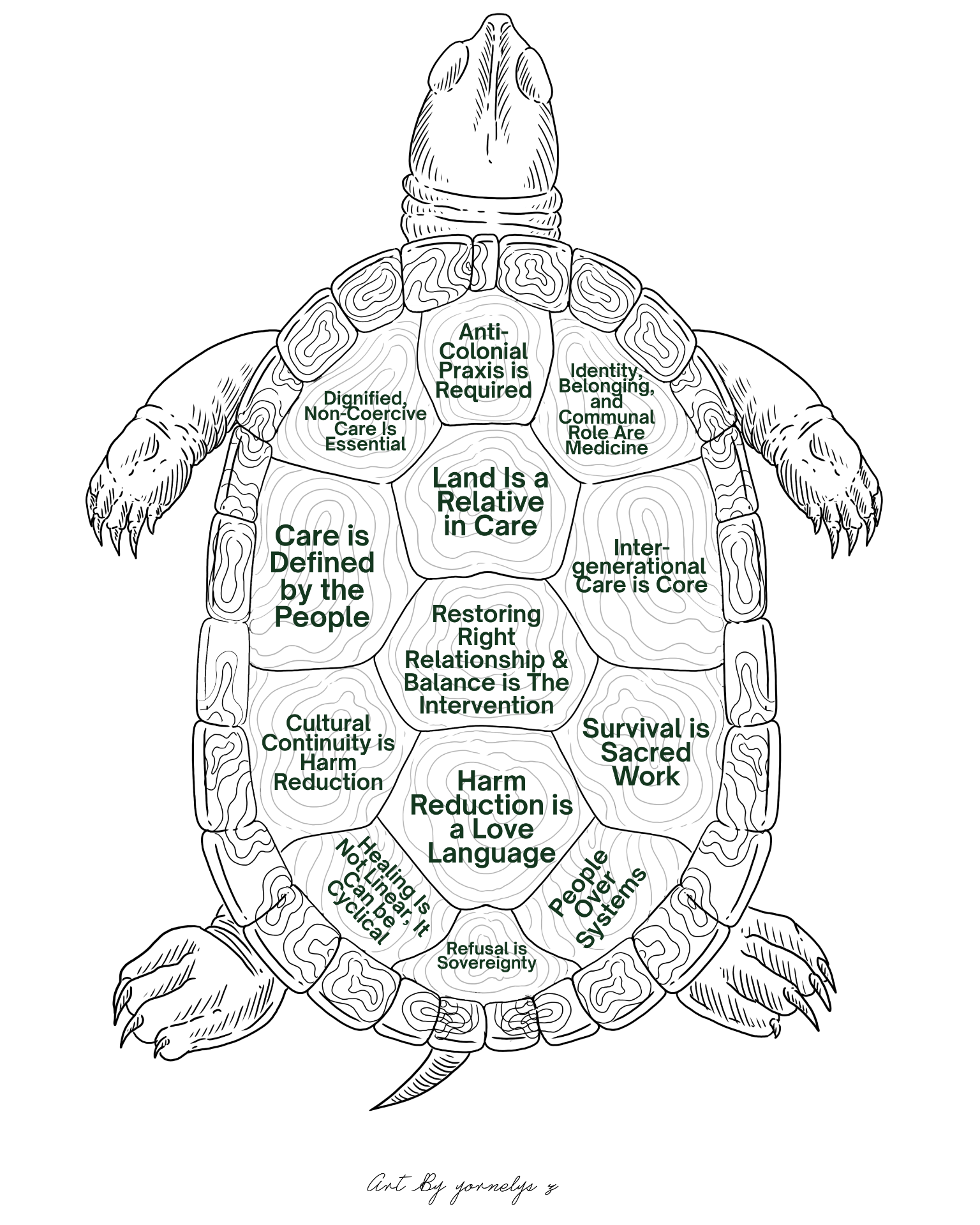
- 01Anti-Colonial Praxis is Required
- 02Dignified, Non-Coercive Care Is Essential
- 03Identity, Belonging, and Communal Role Are Medicine
- 04Land Is a Relative in Care
- 05Care Is Defined by the People
- 06Intergenerational Care Is Core
- 07Restoring Right Relationship and Balance Is the Intervention
- 08Cultural Continuity Is Harm Reduction
- 09Survival Is Sacred Work
- 10Harm Reduction Is a Love Language
- 11Healing Is Not Linear, It Can Be Cyclical
- 12Refusal Is Sovereignty
- 13People Over Systems
Who This Is For
Built for the people already doing the work — and those ready to begin.
- Providers new to Indigenous harm reduction
- Social workers and counselors
- Community health workers
- Educators and trainers
- Indigenous community members
- BIPOC providers and advocates
About the Speaker
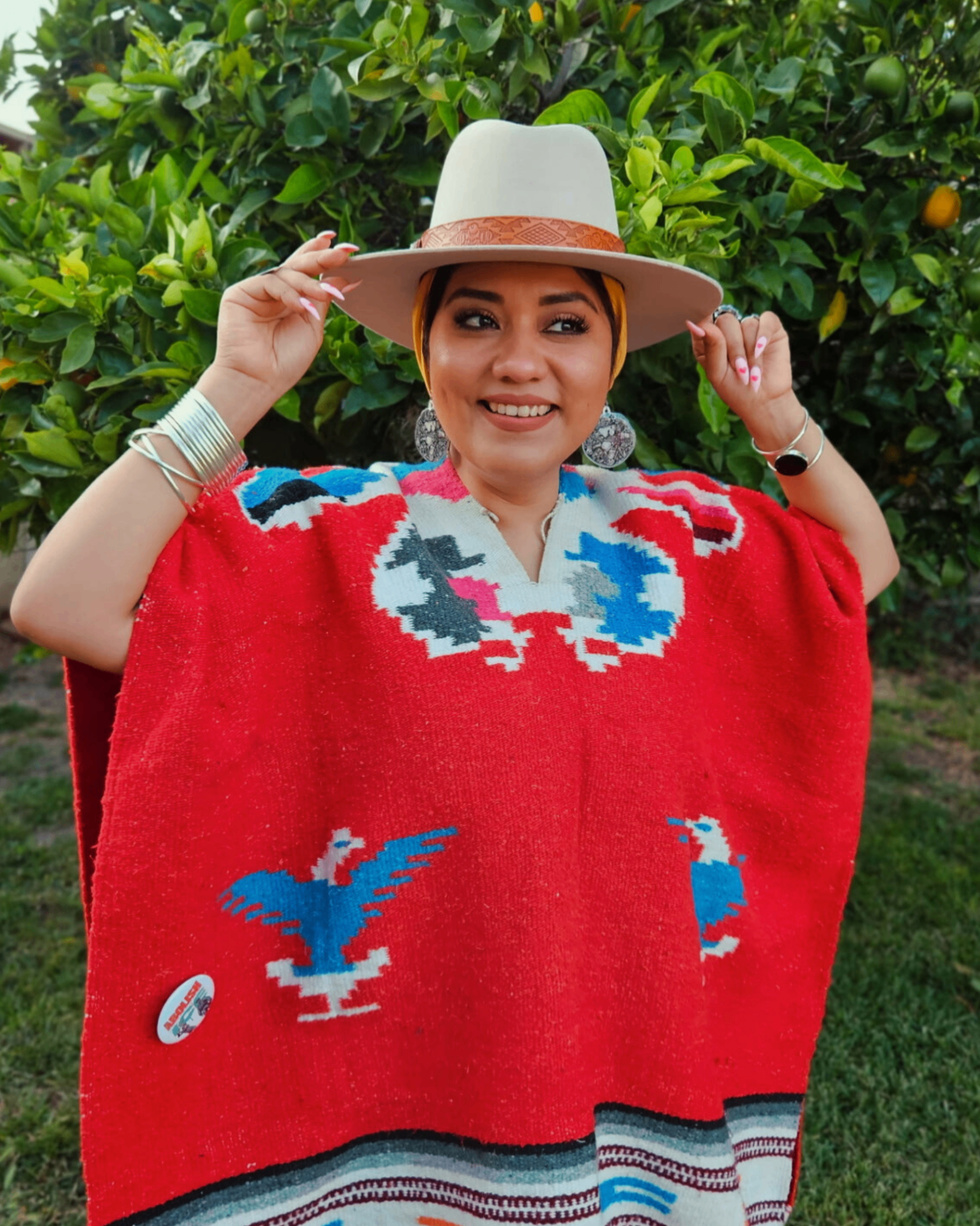
Glo V.
she/her · Founder, Nalgona Positivity Pride
Glo V. is a Xicana educator and activist with Nahuatl roots from Michoacán and unknown Indigenous ancestry from Western and Southern Jalisco. Her work centers eating disorder harm reduction and the political realities of body-based oppression.
She was first exposed to harm reduction in her early twenties through the punx anarchist community in Riverside, California. As the founder of Nalgona Positivity Pride, Glo brings a community-taught approach that challenges Western recovery models in eating disorder care, addresses colonial violence and systemic healthcare neglect, and uplifts Indigenous matriarchal knowledge as a cultural foundation for collective mental health and resilience.
Don't Just Take My Word For It
This wasn't a webinar, it was a community member sharing a love language of truth and healing. Even through the computer, I felt loved and supported in ways that rarely exist in ED treatment spaces. Glo fully demonstrates the ways harm reduction can and should exist as a liberatory, community-based practice.
Just wow. An absolutely incredible, deep intersectional dive — an embodied, transformative exploration of historic, cultural implications and considerations in the development of eating disorders. I was filled with relief, joy, and grief as Glo took us through this material.
Bonuses Included
Get these digital products with registration.
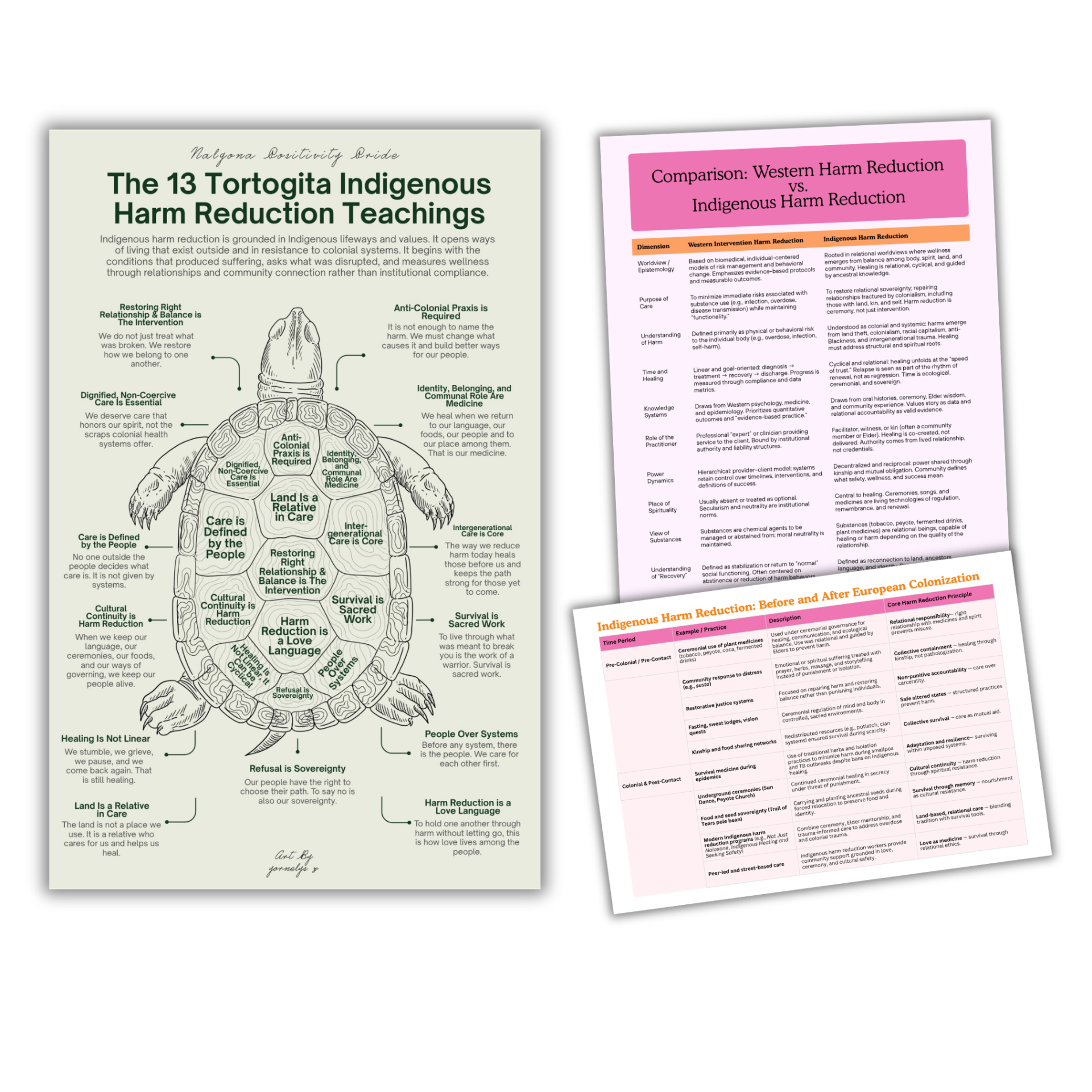
Every registrant receives a curated bundle of printable teachings, comparison guides, and reference posters — yours to keep, share, and use in practice.
- 01
The 13 Tortogita Teachings
11×17 printable PDF poster — illustrated framework you can hang in your office or classroom.
- 02
Western vs. Indigenous Harm Reduction
Side-by-side comparison guide across worldview, purpose, healing, and ethic of care.
- 03
Before & After European Colonization
Reference table tracing Indigenous harm reduction practices through pre-contact and colonial periods.
Pricing
One registration. Both dates.
Early Bird
$39
Available for a limited time. Includes access to both session dates.
Claim Early BirdGeneral Admission
$49
Standard registration after the early bird window closes. Includes access to both session dates.
RegisterInstallment plan available. Pay in two parts. Select at checkout.
Your registration fee is a direct contribution to the only in-community harm reduction effort centering Indigenous and communities of color in eating disorder care. These funds help make culturally rooted, non-coercive support possible beyond institutional settings.
All Sales Are Final
FAQ
Questions, answered.
Pricing and Accessibility Statement
Why this work is priced the way it is.
Nalgona Positivity Pride has always been committed to making education as accessible as possible, even while operating with limited resources. The eating disorder recovery professional landscape has been historically built around whiteness, thinness, and exclusion. NPP is one of the few remaining BIPOC-led eating disorder efforts that has not been absorbed by institutional funding, and that autonomy comes with real financial and professional consequences.
I am not a licensed provider. I do not run a private practice and do not receive grants. NPP is not a non-profit. It is a one-person, self-funded project. As the cost of living rises and my caregiving responsibilities shift, pricing has been adjusted to allow this work to continue without causing further harm to me, a person still living with an eating disorder.
- Patreon from $3/month →
- Free blog access →
- Low-cost EDHR Membership →
- Free monthly support groups →
- Harm Reduction Circle →
Sliding-scale and scholarship rates are available for most events. Fully funded scholarships exist. Regular freebies go out through the email list. Surviving capitalism while doing community-based work outside institutional systems is complicated and costly. Your investment in work that lives outside systems that were never built for us is what keeps this going.
Disclaimers and Care Notes
This work draws on the knowledge, languages, and cultural frameworks of Indigenous nations and communities. These teachings belong to the peoples from whom they come and should not be taken as universal or detached from their original contexts. Any interpretation offered here reflects one perspective and should not replace the voices, protocols, or authority of the communities themselves. Readers are encouraged to seek guidance from local Indigenous knowledge keepers and to engage with this material in a spirit of respect, reciprocity, and accountability.
Content may include discussion of eating disorders, trauma, colonial violence, boarding schools, suicidality, and systemic oppression. Please participate at your own pace and care for your wellbeing as needed.
This offering is not a substitute for professional medical or mental health care. If you are currently under treatment, you are encouraged to integrate this material in discussion with your care team.
One registration. Access to both dates.
Choose the session that works for you, or attend both. Registration includes the recording.